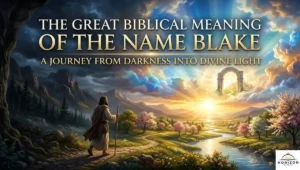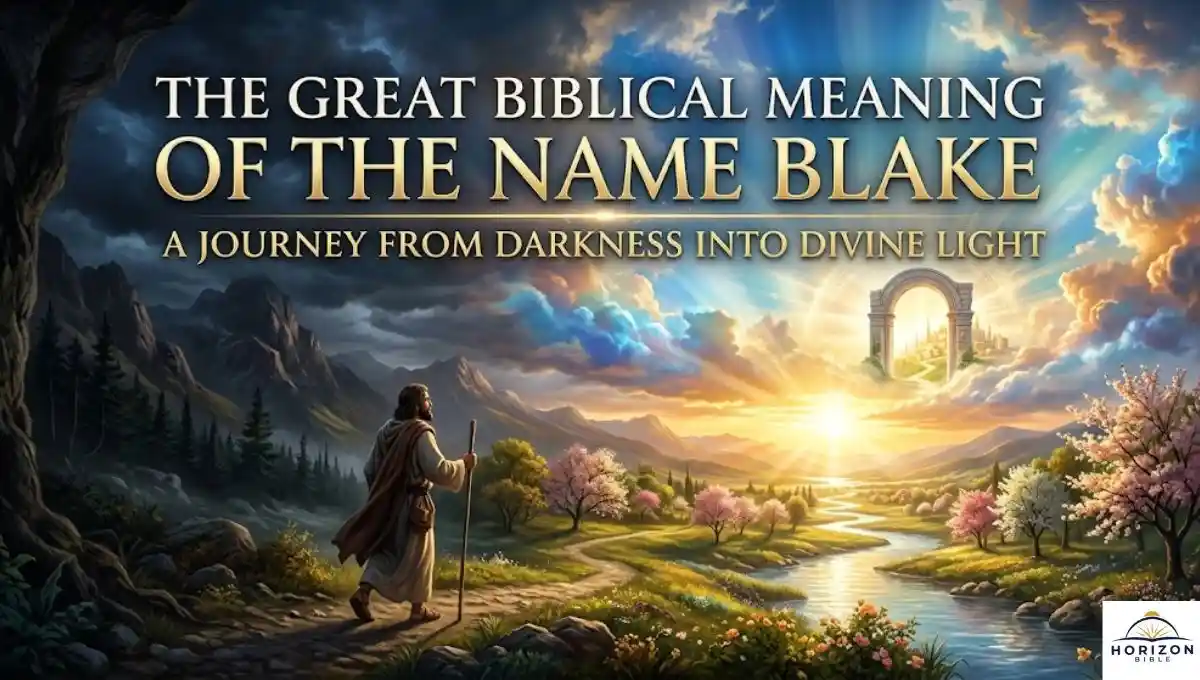
Few names carry as much quiet tension as Blake. On the surface, it sounds modern and simple, a favorite for baby boys and baby girls alike.
But dig into its roots, and you find a name built on contrast: dark and pale, shadow and shine. That built-in paradox is exactly why so many parents search for the biblical meaning of Blake before they write it on a birth certificate.
This article breaks down the true origin of the name Blake, explores whether it is a biblical name, and unpacks the spiritual symbolism it carries through the timeless theme of darkness turning into light.
Whether you’re naming a child, researching your own name, or simply curious about Christian name meanings, here is a clear, well-researched look at everything Blake represents.
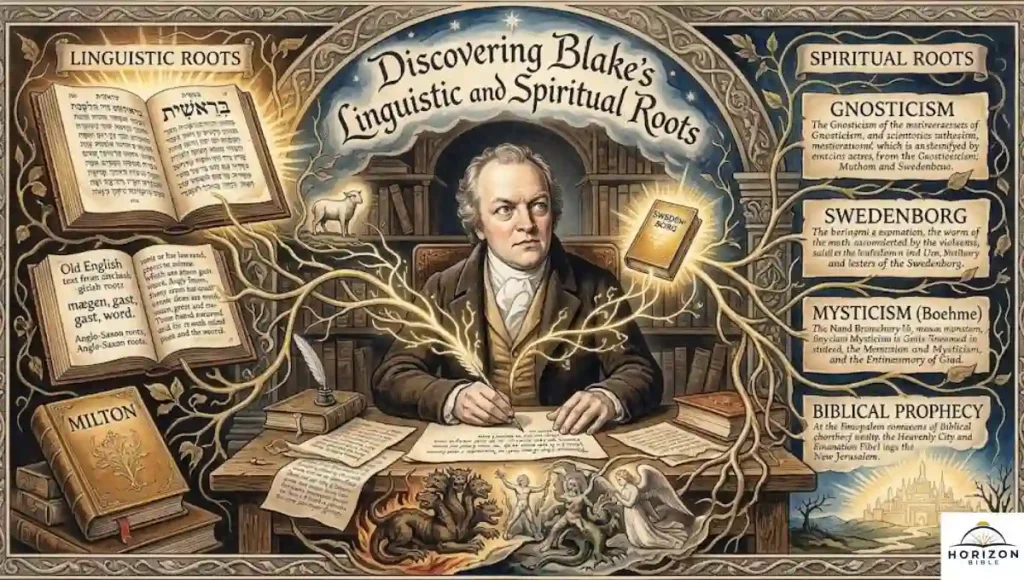
Discovering Blake’s Linguistic and Spiritual Roots
Origins of the Name Blake
The name Blake comes from Old English, and its history is genuinely unusual because it descends from two nearly opposite root words.
| Old English Root | Literal Meaning | Common Association |
| blæc | Black, dark | Dark hair, dark complexion, night |
| blāc | Pale, bright, fair | Light skin, brightness, clarity |
Because medieval scribes recorded these words almost identically, nobody can say for certain which root gave us the modern name. So Blake’s meaning genuinely sits between “dark” and “light,” a linguistic coincidence that gives the name its unique spiritual pull. It’s a gender-neutral name of Old English origin, used comfortably for both boys and girls in modern Christian households.
Quick facts about the name Blake:
- Origin: Old English
- Meaning: Dark/black or pale/bright, depending on the root
- Gender: Unisex, used for boys and girls
- Type: Originally a surname, now a popular first name
Blake in Historical and Cultural Context
Blake began life as a surname, often describing someone’s coloring or complexion, long before it became a common first name. Records trace it back to medieval England, where surnames frequently grew out of a person’s appearance or trade.
Over the centuries, Blake shifted from surname to given name and steadily grew in popularity across the United States and United Kingdom. Today it ranks among the more recognizable modern names, valued for sounding strong, simple, and timeless. The English poet and artist William Blake also helped cement the name’s cultural weight, tying it to creativity, vision, and depth, qualities many parents hope to pass on to their own children.
Social Security data shows Blake climbing steadily through the late twentieth century before settling into its current, comfortably popular range. Part of that staying power comes from its flexibility. Blake works equally well as a boy name meaning strength and simplicity, or a girl name meaning quiet confidence, which is rare among names with such old, well-documented roots.
Parents drawn to Christian baby names often appreciate that flexibility, since it lets the name’s spiritual symbolism speak for itself rather than being tied to one gender or one narrow interpretation.
Read More : Carson Meaning in Bible: Faith, Symbolism, and Origins
The Biblical Symbolism Hidden Within Blake
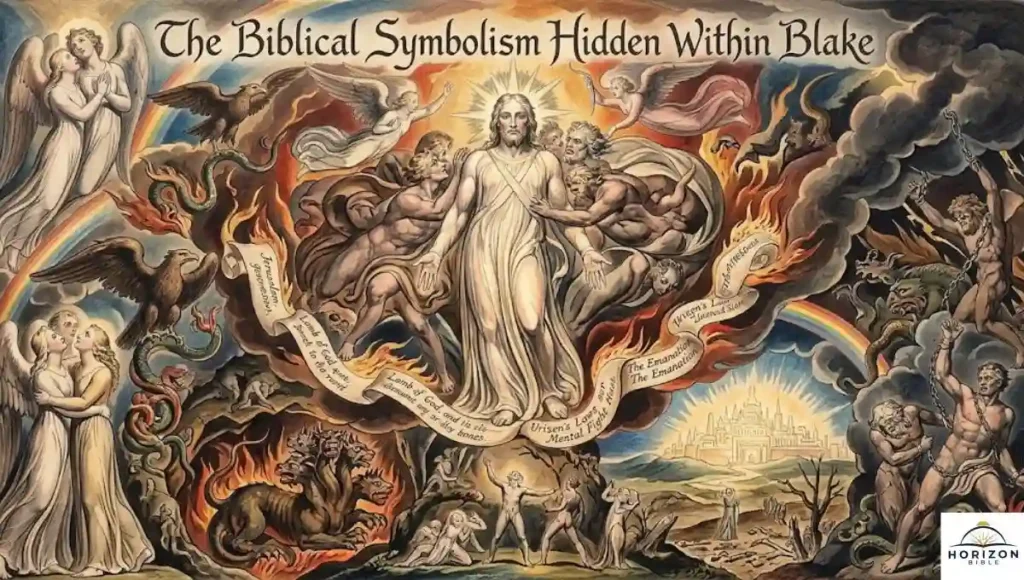
Biblical Symbolism of Blake: Darkness and Light
Here’s an important clarification: Blake is not a biblical name, and it does not appear anywhere in Scripture. Anyone claiming the Bible directly defines this name is stretching the truth. What Blake does have is a strong thematic connection to one of the most repeated ideas in the entire Bible, the contrast between darkness and light.
Scripture returns to this theme again and again:
| Bible Reference | Core Theme |
| Genesis 1:3 | God speaks light into existence |
| Isaiah 9:2 | Those walking in darkness see a great light |
| John 8:12 | Jesus describes Himself as the Light of the World |
| 2 Corinthians 4:6 | God’s light shines into the human heart |
| Ephesians 5:8 | Believers are called children of light |
Because Blake’s Old English roots hold both dark and light within a single word, the name naturally lines up with this biblical pattern. It becomes less about a literal biblical meaning and more about a symbolic one, rooted firmly in Christian tradition rather than Scripture itself.
Darkness Turned to Light
The Bible is full of people whose stories move from darkness into light. Saul’s transformation into Paul is the clearest example, a man consumed by opposition to the early church who became one of its greatest voices after a life-altering encounter with God. That same arc, moving from confusion or hardship into clarity and purpose, mirrors what the name Blake can represent for someone reflecting on their own faith journey.
This is where the name’s dual meaning becomes genuinely meaningful. It doesn’t erase the dark chapters of a person’s story; it acknowledges them, then points toward transformation. That’s a far more honest picture of faith than pretending the darkness never existed at all.
The Call to Shine
Beyond transformation, the Bible repeatedly calls believers to actively shine. Matthew 5:14-16 describes followers of Christ as “the light of the world” who are meant to let that light be seen, not hidden away. Ephesians 5:8 reinforces the same idea, urging believers to walk as children of light.
For someone named Blake, this theme can serve as a gentle, ongoing reminder:
- Darkness is part of the story, but it isn’t the ending
- Light is something to be lived out daily, not just received
- Every person has a role in reflecting hope to others
Living Out Blake’s Spiritual Heritage
Spiritual Lessons from the Name Blake
The spiritual lessons tied to the name Blake go beyond etymology. A few stand out clearly:
- Identity in Christ: true identity isn’t found in a name’s origin but in a relationship with God
- Redemption: no past season of darkness disqualifies someone from a bright future
- Resilience: the dual meaning of dark and light reflects real human experience, not a fairy tale
- Hope: Scripture consistently promises that light eventually overtakes darkness
Blake and the Christian Life
Living out the name Blake in a Christian context isn’t about the letters on a birth certificate. It’s about embracing the ongoing, everyday process of spiritual growth, often called sanctification, where someone learns to walk in obedience while trusting God’s leading.
Practically, that might look like:
- Choosing honesty over hiding personal struggles
- Showing kindness even during difficult seasons
- Leaning on prayer and community during uncertain times
- Actively looking for ways to encourage others
A Broader Reflection on Light and Darkness
Blake isn’t alone in carrying this kind of dual symbolism. Many names across cultures hold contrasting meanings, and Scripture itself never promises a life free of darkness. What it promises is that darkness doesn’t get the final word. That broader truth applies far beyond any single name, offering a framework for understanding hardship, growth, and hope that any believer can hold onto.
It’s worth remembering that names don’t determine destiny. Choosing Blake for a child, or embracing it as your own, doesn’t guarantee a particular spiritual path. What it can do is offer a built-in conversation starter, a small daily nudge toward reflecting on where light and darkness show up in everyday life, and how faith shapes the way someone responds to both.
FAQs About the Biblical Meaning of Blake
Is Blake a biblical name?
No, Blake does not appear anywhere in Scripture. It’s an Old English name that carries strong symbolic ties to biblical themes of light and darkness.
What does the name Blake mean spiritually?
Spiritually, Blake represents the journey from darkness into light, echoing biblical stories of transformation, redemption, and renewed purpose through faith.
Does Blake mean dark or light?
Both. Blake descends from two similar Old English words, one meaning dark or black and the other meaning pale or bright, so its meaning genuinely sits between the two.
Is Blake mentioned in the Bible?
Blake is never mentioned in the Bible. Its connection to Scripture is symbolic and cultural rather than a direct biblical reference.
What is the origin of the name Blake?
Blake originated in medieval England as a surname before becoming a popular first name, rooted in Old English words describing someone’s coloring or complexion.
Is Blake a good Christian baby name?
Yes, many Christian parents choose Blake for its meaningful symbolism, even though it isn’t a biblical name, because the darkness-to-light theme resonates deeply with Christian faith.
What Bible verse relates to the name Blake?
Isaiah 9:2 is often connected to Blake, since it speaks of people walking in darkness who see a great light, mirroring the name’s dual meaning.
Conclusion: Embracing Your Light
The name Blake tells an honest story. It doesn’t pretend life is only bright or only dark; it holds both, the same way real faith does. That’s what makes the biblical meaning of Blake so relatable, even though the name itself never appears in Scripture.
If you carry this name, or you’re choosing it for a child, let it be a daily reminder that darkness never has the final say. Like Isaiah promised, and like Paul’s own transformed life proved, light always breaks through. Blake, in the end, is simply an invitation to keep walking toward it.

Abdul Mannan Haider | Founder of HorizonBible.com Christian author and scripture researcher with 7+ years of experience. Providing faith-filled prayers, biblical blessings, and deep word studies to help global believers connect with the truth of the Bible.