Understanding deity meaning in the Bible opens a door into the very character of God. Scripture uses the word deity to describe the divine essence, power, and eternal nature that belongs to God alone.
From the opening verses of Genesis to the final chapters of Revelation, the Bible reveals a Creator who is holy, sovereign, and unchanging. Grasping this biblical truth helps believers understand why worship, prayer, and daily faith center entirely on who God is and what He has revealed about Himself throughout Scripture.
This article walks through the biblical meaning of deity, the deity of God the Father, the deity of Jesus Christ, and how the Trinity reveals one divine essence expressed in three persons.
It also explores this concept through worship, prophecy, daily life, and practical faith lessons, giving readers a complete and Scripture based picture of God’s divine nature, His unmatched authority, and His constant presence among His people.
Biblical Meaning of Deity
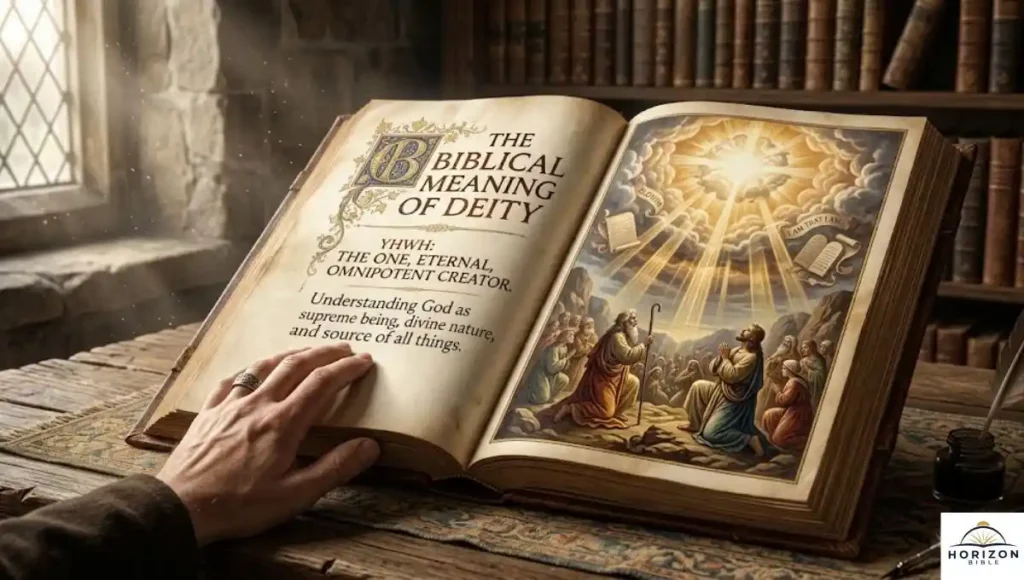
The term deity meaning refers to the nature of being God, possessing qualities that no created being, angel, or human can ever claim. In Scripture, this concept points directly to holiness, eternal existence, and supreme authority over all creation, seen and unseen. Understanding deity meaning helps clarify exactly how the Bible separates the Creator from everything He has made, no matter how powerful or glorious that creation may appear.
1. Definition of Deity in the Bible
Biblically, deity meaning describes the essential nature of God, His Godhead, and the divine attributes that set Him apart from every other being in existence.
- Deity means possessing the full nature and essence of God
- It includes holiness, sovereignty, and eternal power
- Romans 1:20 speaks of God’s eternal power and divine nature
- No created being can fully share in this essence
2. Deity of God the Father
God the Father is revealed throughout the Old Testament as the one true God, the Creator, and the sovereign ruler over heaven and earth.
- Genesis 1:1 introduces God as Creator of all things
- Exodus 3:14 reveals His self existent name, “I Am”
- Isaiah 45:5 declares there is no God besides Him
- Psalm 90:2 affirms His existence from everlasting to everlasting
3. Deity of Jesus Christ
The deity of Jesus Christ stands as one of the strongest themes in the New Testament. Jesus is shown as fully God and fully man, sharing the same divine nature as the Father while walking among humanity.
- John 1:1 identifies Jesus as the Word who was God
- Colossians 2:9 says the fullness of deity dwells in Christ bodily
- John 20:28 records Thomas calling Jesus “my Lord and my God”
- Hebrews 1:8 shows the Father addressing the Son as God
4. Deity and the Trinity
The Trinity teaches that one God exists eternally as Father, Son, and Holy Spirit, three distinct persons sharing the same divine essence and glory.
- Matthew 28:19 names Father, Son, and Holy Spirit together
- Each person of the Trinity is fully God, coequal and coeternal
- The Holy Spirit’s divine role is affirmed throughout the New Testament
- This truth remains central to historic Christian doctrine
- Understanding the Trinity helps believers avoid confusion about God’s identity while embracing the mystery of three persons united in one divine essence
Read More : The Great Biblical Meaning of the Name Blake: A Journey from Darkness into Divine Light
Understanding Deity in Worship and Prayer
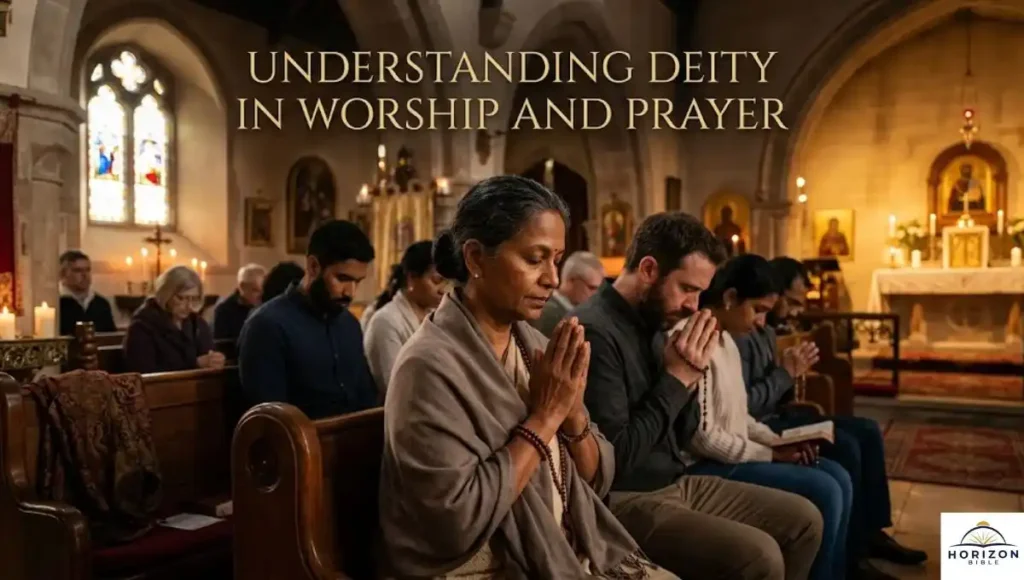
Grasping deity meaning shapes how believers approach worship and prayer. Because God alone possesses this complete divine nature, He alone deserves worship, honor, and unwavering trust from His people.
- Worship acknowledges God’s holiness and supreme authority
- Prayer connects believers to God’s eternal presence
- Recognizing this truth deepens reverence during corporate worship
- True worship flows from a genuine understanding of who God is
- Daily prayer becomes richer when rooted in this knowledge
- Believers who understand this truth often describe a deeper sense of peace, even during trials, because they know their prayers reach a God who is fully present and fully able to act on their behalf
The Deity of Christ in Bible Verses and Prophecy
Old Testament prophecy and New Testament Scripture together confirm the deity of Christ across centuries. The table below highlights key verses believers often study when exploring this topic.
| Bible Verse | Meaning |
| Isaiah 9:6 | Prophesies a child called Mighty God |
| Micah 5:2 | Foretells the eternal Ruler born in Bethlehem |
| Isaiah 7:14 | Names Immanuel, meaning God with us |
| John 1:14 | The Word became flesh and dwelt among us |
| Philippians 2:6 | Christ existed in the very nature of God |
| Titus 2:13 | Calls Jesus our great God and Savior |
| Hebrews 1:8 | The Father addresses the Son as God |
These verses show a consistent thread running through the entire Bible. This truth is not a New Testament invention but a promise woven through centuries of prophecy, fulfilled perfectly in Christ. Old Testament prophets spoke of a coming Ruler who would be both human and divine, and the New Testament writers confirmed this fulfillment with careful, deliberate language throughout their letters and gospel accounts.
Spiritual Significance and Symbolism of Deity
Beyond doctrine and theology, deity meaning carries deep spiritual significance for everyday believers seeking closeness with God in their daily walk. For many Christians, this truth becomes most tangible during quiet moments of prayer, reflection, and worship, when God’s presence feels close rather than abstract.
1. Deity as God’s Presence
God’s divine nature is not distant or removed from His people. Scripture describes His presence filling creation, dwelling among believers, and comforting the brokenhearted in every season.
2. Deity and Human Faith
Faith grows stronger when believers grasp that the God they trust is fully sovereign, fully powerful, and fully present in every circumstance of life, whether joyful or difficult.
3. Transformation Through Knowing God
Knowing God’s true nature transforms character, renews the mind, and produces lasting spiritual growth rooted in truth rather than fleeting emotion or circumstance.
Deity in Daily Life and Spiritual Experience
This concept is not only theological, it is deeply practical for daily walking with God through ordinary moments and major decisions alike. Applying deity meaning to everyday circumstances helps believers remain grounded during uncertainty, disappointment, and unexpected trials.
1. Recognizing God’s Deity in Life
Believers often notice God’s hand in answered prayer, provision, protection, and quiet moments of peace throughout otherwise ordinary days.
2. Deity in Christian Belief
Christian belief rests firmly on the conviction that God is holy, powerful, and personally involved in the lives of His people, both individually and collectively.
3. Responding to God’s Deity
A right response includes surrender, obedience, gratitude, and a willingness to trust God’s plan even during seasons of uncertainty or hardship.
Practical Lessons & Faith Insights
Understanding deity meaning offers several practical takeaways believers can apply to daily faith and spiritual growth. These insights help turn theological knowledge into lived, everyday experience:
- Approach God with reverence, knowing His holiness
- Rest in His sovereignty during difficult seasons
- Study Scripture regularly to deepen understanding of His nature
- Let worship flow from genuine knowledge of who God is
- Trust that God’s presence remains constant and unchanging
- Share this understanding with others seeking spiritual clarity
Conclusion
Deity meaning in the Bible reveals a God who is holy, eternal, and unmatched in power and glory. From the Father’s sovereign rule to the Son’s incarnate glory and the Spirit’s constant presence, Scripture paints one unified picture of divine nature across both Testaments.
Grasping this truth changes how believers pray, worship, and live each day with confidence. It builds assurance that God remains present, faithful, and worthy of complete trust in every circumstance. Every believer can find lasting comfort knowing this same God remains unchanging today.
FAQs About Deity Meaning in the Bible
What does deity mean in the Bible?
Deity refers to the divine nature and essence of God, including His holiness, power, and eternal existence. It describes qualities only God possesses.
What is the biblical definition of deity?
The biblical definition centers on God’s complete divine nature, encompassing sovereignty, eternity, and supreme authority over all creation.
Is Jesus considered deity in the Bible?
Yes, Scripture affirms Jesus shares the same divine essence as the Father, fully God while also fully human on earth.
How does the Trinity relate to deity?
The Trinity reveals one divine essence existing as three coequal persons, Father, Son, and Holy Spirit, together sharing full divinity.
What Bible verses prove Jesus is God?
Verses like John 1:1, Colossians 2:9, and Titus 2:13 clearly affirm the deity of Jesus Christ throughout Scripture.
Why does understanding deity meaning matter for Christians?
Understanding this truth strengthens faith, deepens worship, and helps believers trust God’s sovereign character in daily life.
How is deity different from divinity?
Deity refers to being fully God in essence, while divinity often describes godlike qualities shared or reflected in others.

Abdul Mannan Haider | Founder of HorizonBible.com Christian author and scripture researcher with 7+ years of experience. Providing faith-filled prayers, biblical blessings, and deep word studies to help global believers connect with the truth of the Bible.