The Tristan name meaning is one of the most searched topics among parents who want Celtic baby boy names with deep spiritual roots. Many people ask whether Tristan appears in Scripture or carries hidden Christian symbolism. This guide explains the Tristan name meaning, its origin, and its faith connections.
Tristan comes from Celtic and medieval European tradition, tied to the legend of Tristan and Isolde and King Arthur’s court. Its sorrowful sense, linked to Latin tristis and Old French triste, echoes biblical themes of grief, comfort, and redemption. Understanding the Tristan name meaning helps you choose a name with confidence.
Tristan Meaning in Bible: More Than Just a Name
Tristan is not a biblical name, so no verse defines it directly. Even so, the Tristan name meaning (“sorrowful” or “tumult”) fits a theme found throughout the Bible: God meets people in their pain. Names in Scripture often reflect circumstances, and the Tristan name meaning carries that same spirit.
Tristan Name Meaning Bible
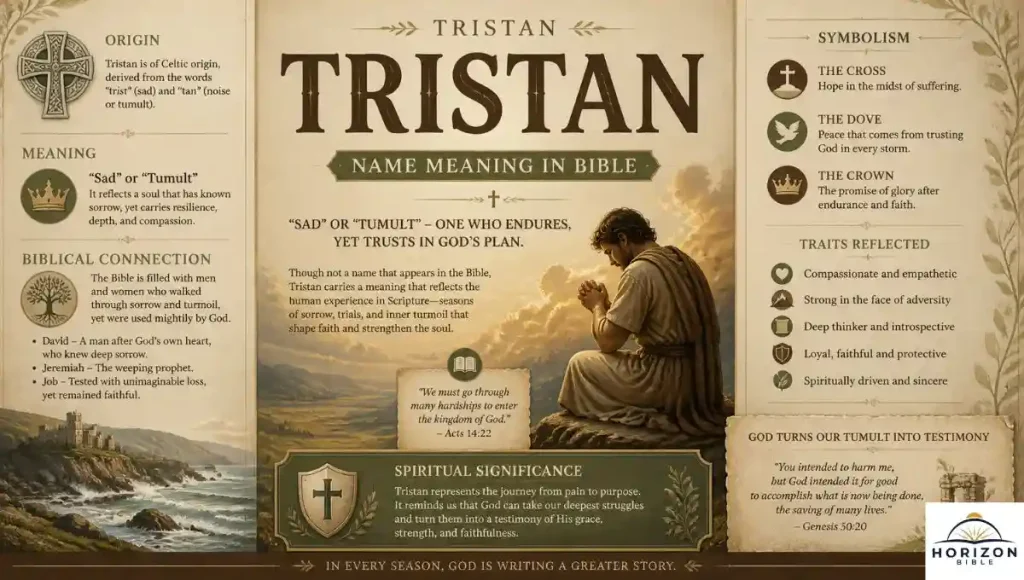
Searching for the Tristan name meaning Bible connection leads to a simple truth. The name is a later Celtic and Christian-era creation, but its sense of sorrow matches many scriptural stories. Readers can explore the name through biblical ideas rather than a literal verse.
| Aspect | Details |
|---|---|
| Origin | Celtic (Pictish, Welsh, Cornish) |
| Common meaning | Sorrowful, tumult, noisy |
| Mentioned in Bible | No |
| Related themes | Comfort, endurance, redemption |
| Popular forms | Tristram, Tristian, Drustan |
Biblical View of Sorrow
The Bible does not treat sorrow as weakness. Psalm 34:18 says the Lord is near to the brokenhearted, and Isaiah 53:3 calls Christ a man of sorrows. In this light, the Tristan name meaning reflects a life shaped by empathy and spiritual depth.
What Does Tristan Mean in the Bible?
Because the name is absent from Scripture, its biblical meaning is symbolic. Many Christian parents read the Tristan name meaning through three lenses.
1. A Heart That Understands Suffering
Jesus was “acquainted with grief” according to Isaiah 53. A boy named Tristan may be seen as someone who understands pain and responds with wisdom.
2. Compassion for Others
Matthew 5:4 promises that those who mourn will be comforted. Those who carry a sorrow-linked name may feel called to comfort others in turn.
3. Faith Through Difficult Seasons
James 1:2-4 teaches that trials build perseverance. The Tristan name meaning can symbolize faith that stays steady through hardship.
What Does the Name Tristan Mean?
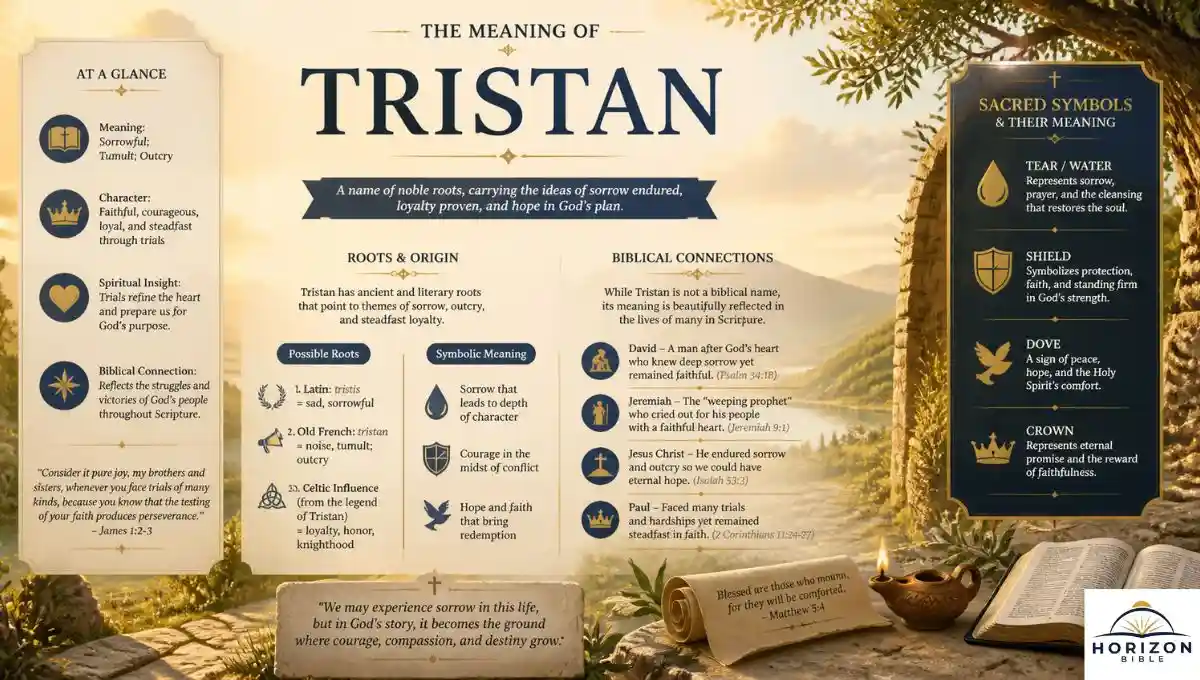
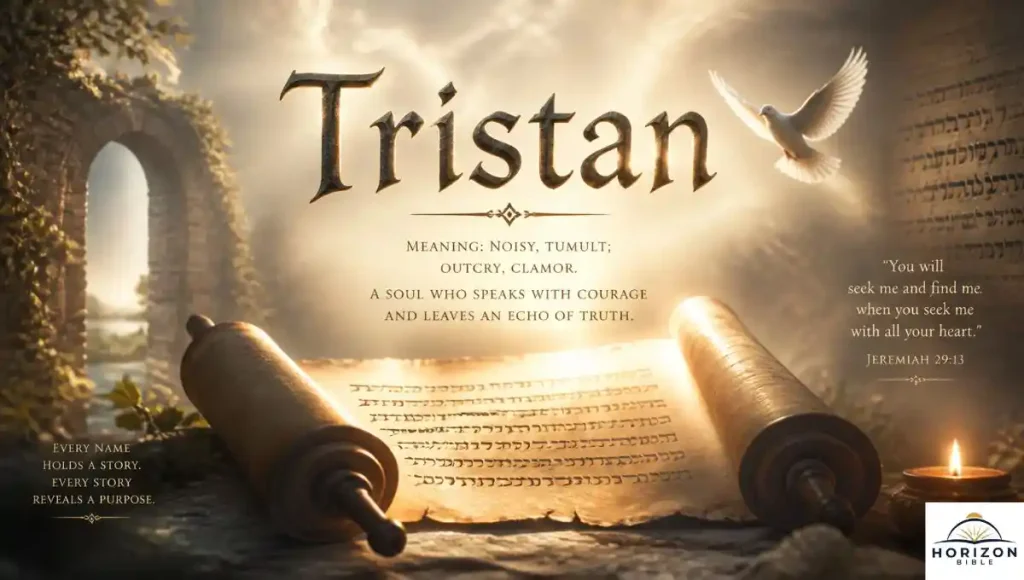
In everyday use, the Tristan name meaning is “sorrowful,” though many sources also give “tumult” or “uproar.” Today the name is usually seen as romantic, noble, and literary rather than sad. It remains a popular choice among baby boy names in the United States and the United Kingdom.
Etymology and Historical Origins of Tristan
The name began as the Pictish Drustan, a diminutive of Drust. Medieval French writers reshaped it into Tristan, linking it with triste, meaning sad. This shift is central to the modern Tristan name meaning.
| Period | Form | Notes |
|---|---|---|
| Early medieval | Drustan, Drystan | Pictish and Welsh |
| 12th century | Tristan, Tristram | Old French romances |
| Modern era | Tristan, Tristen | Widespread baby name |
Is Tristan Mentioned in the Bible?
No. Tristan does not appear in the Old or New Testament. The Tristan name meaning therefore comes from European folklore and Christian culture, not from a biblical character. That does not make it unspiritual, since many Christian names, such as Patrick and Francis, are also not found in Scripture.
Spiritual Significance of the Name Tristan
Spiritually, the Tristan name meaning points to a soul that has known sorrow and found hope. Many believers see it as a reminder that grief is temporary. Psalm 30:5 says weeping may last for a night, but joy comes in the morning.
Christian Symbolism and Faith Connections
Christian readers often connect the Tristan name meaning with these ideas:
- Redemption: sorrow transformed into joy
- Empathy: sharing the burdens of others (Galatians 6:2)
- Endurance: holding firm in trials (Romans 5:3-4)
- Hope: trusting God through loss
Tristan in Biblical History and Tradition
Tristan has no place in biblical history, but it rose during the Christian Middle Ages. The tale of Tristan and Isolde was told in monasteries and courts across Europe, shaping the Tristan name meaning in Christian culture. Over centuries the name became linked with loyalty, love, and tragic nobility.
The Origin of Tristan in Celtic and Christian Culture
The Tristan name meaning grew from Celtic soil. Early Cornish and Welsh stories describe Drustan as a heroic figure, and Arthurian writers later made him a knight of the Round Table. As Christianity spread across Britain, the name gained a moral and spiritual color, representing devotion and sacrifice.
Read More : Deity Meaning in the Bible: Understanding God’s Divine Nature and Presence
Biblical Names Similar to Tristan
Several biblical names share the sorrow theme that defines the Tristan name meaning:
| Name | Meaning | Reference |
|---|---|---|
| Ben-Oni | Son of my sorrow | Genesis 35:18 |
| Mara | Bitter | Ruth 1:20 |
| Jabez | Pain, sorrow | 1 Chronicles 4:9 |
| Ichabod | The glory has departed | 1 Samuel 4:21 |
| Benjamin | Son of the right hand | Genesis 35:18 |
Notably, Ben-Oni’s name was changed to Benjamin, showing sorrow turned into blessing. That story mirrors the hopeful side of the Tristan name meaning.
Why Parents Choose Tristan: A Biblical Perspective
Parents choose Tristan for several reasons, and many connect the Tristan name meaning with faith:
- It sounds strong, romantic, and timeless
- It carries Celtic heritage and Arthurian charm
- It reflects empathy and spiritual depth
- It pairs well with biblical middle names such as David, James, or Elijah
Pairing Tristan with a biblical middle name is a popular way to add Scripture-based meaning.
Tristan Name Meaning in Hebrew
Tristan has no Hebrew origin or Hebrew meaning. Still, Hebrew words for sorrow help explain the Tristan name meaning in a biblical setting. Words such as yagon (grief) and marah (bitter) appear throughout the Old Testament.
1. Sorrow and Depth of Heart
Hebrew thought places emotion in the heart. Sorrow is shown as honest and deeply human, which suits the Tristan name meaning.
2. Transformation Through Trials
Stories like Naomi becoming Mara, then finding restoration, show grief leading to renewal. The Tristan name meaning can carry the same message of transformation.
Tristan Name Meaning in Greek
Tristan is not Greek either. The sorrow link comes from Latin tristis, not from Greek. The Greek New Testament word for sorrow is lypē, used in 2 Corinthians 7:10, which speaks of godly sorrow leading to repentance. This gives believers a Greek-language bridge to the Tristan name meaning.
The Cultural and Religious Impact of the Name Tristan
Culturally, the Tristan name meaning has influenced literature, opera, film, and music. Wagner’s opera Tristan und Isolde made the name famous worldwide. Religiously, it appears among Christian families who value its sorrow-to-hope theme and its medieval heritage.
What the Bible Teaches About Names and Identity
Scripture treats names as meaningful. God renamed Abram as Abraham and Jacob as Israel, showing that identity can change. The Tristan name meaning, then, is not a destiny, because the Bible teaches that a person’s identity is found in God, not in a label.
Biblical Interpretations in Dreams or Real Life
Some people ask about the Tristan name meaning when the name appears in dreams. The Bible does not give a formula for dream names. Believers are encouraged to test impressions against Scripture and seek wise counsel (1 John 4:1). In real life, the name is best treated as a heritage choice with spiritual reflection added.
Practical Lessons and Faith Insights
Here are key takeaways from the Tristan name meaning:
- Sorrow is not the end of the story
- God draws near to the brokenhearted
- Compassion grows from personal hardship
- A name can inspire, but faith defines identity
- Pair Tristan with a biblical middle name for added meaning
Frequently Asked Questions
What is the Tristan name meaning?
It means “sorrowful” or “tumult,” from Celtic Drustan and Old French triste.
Is Tristan a biblical name?
No. It does not appear anywhere in the Old or New Testament.
What is the Tristan name meaning in Hebrew?
Tristan has no Hebrew meaning. Hebrew words for sorrow only offer a thematic link.
What is the Tristan name meaning in Greek?
It is not Greek. The sorrow sense comes from Latin tristis.
Is Tristan a Christian name?
It is widely used by Christians, though it began in Celtic and medieval tradition.
Does Tristan mean sad?
Originally yes, but today it is seen as noble, romantic, and strong.
What is the origin of Tristan?
It comes from the Pictish name Drustan, later reshaped in French romance.What biblical names are similar to Tristan?
Ben-Oni, Mara, and Jabez share the sorrow theme.
What middle name goes well with Tristan?
Biblical choices like David, James, Elijah, or Samuel pair nicely.
Last Words
The Tristan name meaning (“sorrowful”) may sound heavy, yet it opens a hopeful spiritual story. Although Tristan is not in the Bible, its sorrow theme matches Scripture’s promise of comfort and joy. The Tristan name meaning reflects empathy, endurance, and faith that grows through hardship.
For parents, the Tristan name meaning offers Celtic heritage, literary charm, and Christian symbolism in one choice. Adding a biblical middle name strengthens its spiritual weight. Whether you value history, faith, or style, the Tristan name meaning makes a thoughtful and lasting baby boy name.

Abdul Mannan Haider | Founder of HorizonBible.com Christian author and scripture researcher with 7+ years of experience. Providing faith-filled prayers, biblical blessings, and deep word studies to help global believers connect with the truth of the Bible.