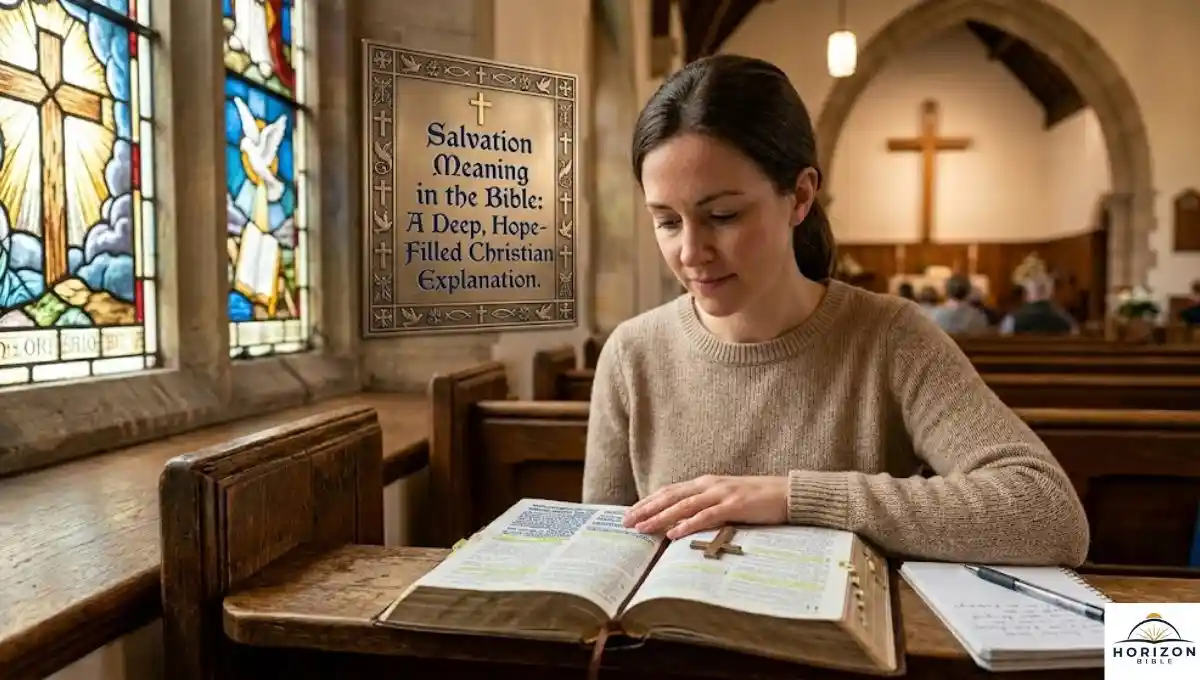
The salvation meaning in the Bible represents one of the most essential and hope-filled truths in all of Christian faith, offering every believer rescue from sin, restoration with God, and the gift of eternal life. Understanding what salvation meaning truly encompasses helps believers move beyond surface-level religion into a deep, transforming relationship with God through Jesus Christ.
In the Bible, salvation refers to God’s act of delivering people from sin and its consequences through faith in Jesus Christ. At its core, salvation is about rescue and restoration, being brought back into a right relationship with God. This article explores the full salvation meaning, its biblical roots, spiritual symbolism, and practical lessons for everyday Christian living.
Biblical Meaning of Salvation in the Bible
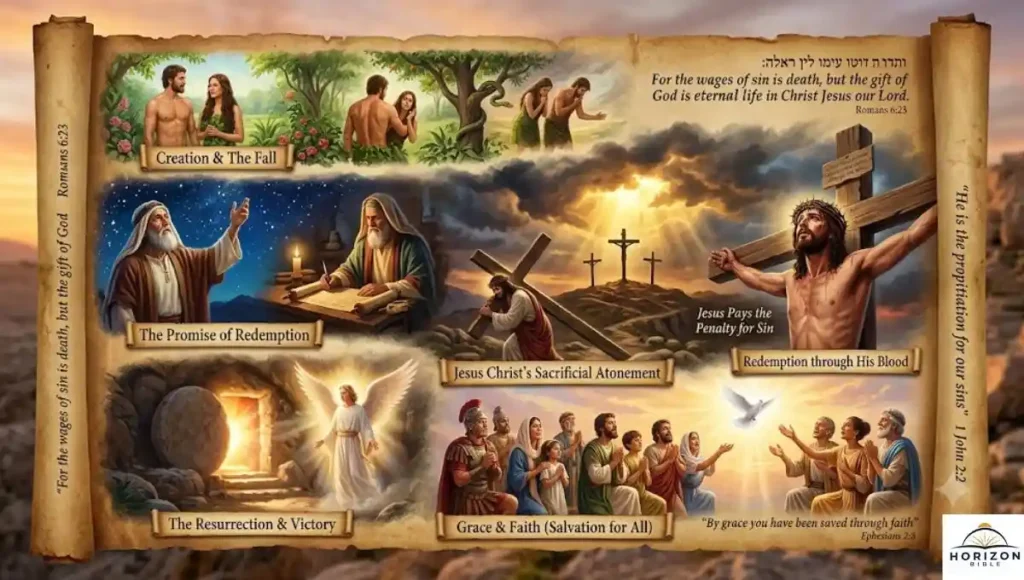
In the Old Testament, the words commonly translated as salvation are “teshu’a” and “yeshu’a,” which mean rescue, deliverance, or release. In the New Testament, the main word for salvation is “soteria,” which can mean both rescue and healing.
| Testament | Original Word | Core Meaning |
| Old Testament | Yeshu’a / Teshu’a | Rescue, deliverance |
| New Testament | Soteria / Sozo | Healing, rescue from sin |
| Hebrew root | Yasha | To save, deliver |
| Greek root | Sozo | To make whole |
Salvation as Rescue
Salvation addresses public threat or personal plight and pertains to both concrete sorrows and sinful corruptions. Whether regarding one’s soul or one’s station in life, salvation conveys rescue. It signals the need for intervention by another.
Salvation meaning in the Bible is never self-achieved. It always involves:
- A person in genuine need of rescue
- God intervening from outside human ability
- Deliverance freely given, never earned
- Restoration to fullness, peace, and wholeness
Salvation From Sin
Salvation is the great work of God in which He forgives sin and gives eternal life to a believing sinner as a free gift of His grace. Forgiveness is needed because all people are born sinners, and new life is needed because all people are born spiritually dead, separated from God.
Salvation Through Jesus Christ
John 3:16 declares, “For God so loved the world, that he gave his only Son, that whoever believes in him should not perish but have eternal life.” Salvation flows from God’s desire to bring life, not destruction.
The salvation meaning through Christ includes:
- His sinless life fulfilling God’s righteous standard
- His death on the cross bearing humanity’s sin
- His resurrection proving victory over death
- His intercession continuing on believers’ behalf
Salvation as Grace
God frees us from the power of sin and eternal death when we repent before Him for the wrongs we have committed and accept Jesus as our Lord and Savior by faith. “For it is by grace you have been saved, through faith, and this is not from yourselves, it is the gift of God.”
A Loving Warning
Salvation meaning also carries an urgent dimension. Without receiving Christ, every person remains separated from God. The same love that offers salvation also warns honestly about its rejection. God’s grace is freely available, but it must be personally received.
Key Bible Verses About Salvation
| Verse | Theme |
| John 3:16 | God’s love as foundation of salvation |
| Ephesians 2:8-9 | Salvation by grace through faith |
| Romans 3:23 | All have sinned and need salvation |
| Romans 10:9-10 | Confessing Christ brings salvation |
| Acts 4:12 | Salvation in no other name |
| Romans 5:1 | Peace with God through salvation |
| Titus 3:5 | Saved by mercy, not works |
| 1 John 5:13 | Assurance of eternal life |
Spiritual Significance and Symbolism

The goal of salvation in both Old and New Testaments is a state of holistic wellbeing often expressed as life and peace. God’s salvation reaches into all areas of life to restore, transform, and heal.
Salvation as New Life
The salvation meaning symbolizes a complete rebirth. Just as a seed must die to produce fruit, the old sinful self dies in Christ and new spiritual life emerges.
- Death of old sinful nature
- Resurrection into new spiritual identity
- Adoption into God’s family
- Inheritance of eternal life
Salvation and Daily Faith
Salvation is not only being saved from something, it is also being saved to someone. We are saved from sin and brought to God. John 8:36 helps us see that we have been set free. Romans 5:1 tells us that we were saved from wrath and brought into peace with God.
Salvation meaning unfolds in three biblical dimensions:
| Dimension | Theological Term | Meaning |
| Past | Justification | Declared righteous by God |
| Present | Sanctification | Being made holy daily |
| Future | Glorification | Perfected in eternity |
Read More : Levi Name in the Bible: Meaning and Spiritual Significance
Biblical Interpretations in Dreams or Real Life
Salvation meaning may connect with daily life and even dreams in powerful ways:
- Dreaming of being rescued from water or fire may reflect God’s saving work
- Experiencing unexpected deliverance in real life points to God’s saving hand
- A season of spiritual awakening or conviction often signals God drawing a heart toward salvation
- Meeting someone who shares the gospel unexpectedly may be a divine appointment
In real life, the salvation meaning plays out through:
- Genuine repentance and turning from old patterns
- Public declaration of faith through baptism
- Transformation of relationships, habits, and character
- Growing hunger for Scripture, prayer, and Christian community
Practical Lessons & Faith Insights
Every believer can draw these practical truths from the salvation meaning in Scripture:
- Salvation is God’s initiative, not human achievement
- No person is too broken or too sinful for God’s saving grace
- Salvation produces transformation, not just forgiveness
- Assurance of salvation is a gift believers can hold confidently
- Sharing salvation with others fulfills the Great Commission
- Daily surrender keeps the salvation meaning alive in practical life
- Gratitude for salvation fuels worship, generosity, and service
FAQs
1. What is salvation meaning in the Bible?
Salvation means God’s act of rescuing humanity from sin and restoring relationship with Him through Jesus Christ.
2. How is salvation received according to Scripture?
By confessing Jesus as Lord and believing in His resurrection, as stated in Romans 10:9-10.
3. Is salvation by works or by grace?
Ephesians 2:8-9 clearly states salvation comes by grace through faith, not by human works.
4. What does salvation meaning include beyond forgiveness?
It includes justification, sanctification, adoption into God’s family, and future glorification.
5. Can salvation be lost once received?
Most evangelical theologians teach that genuine salvation is eternally secure through God’s faithfulness.
6. What is the Old Testament salvation meaning?
In Hebrew, salvation meant deliverance, rescue, and physical protection, pointing forward to Christ.
7. Why is salvation meaning important for daily Christian life?
It transforms identity, motivation, and purpose, anchoring believers in God’s love and eternal hope.
Conclusion
The salvation meaning in the Bible is the greatest story ever told: a holy God rescuing broken humanity through the sacrifice of His Son Jesus Christ, offering forgiveness, restoration, and eternal life as a free gift of grace. Understanding salvation meaning deeply transforms how believers pray, worship, and live every single day.
Whether you are newly discovering salvation meaning or are a seasoned believer, Scripture’s promise remains unchanged: God saves completely, eternally, and lovingly all who call on the name of Jesus Christ. Let the salvation meaning anchor your faith, fuel your witness, and fill your heart with unshakeable hope.

Abdul Mannan Haider | Founder of HorizonBible.com Christian author and scripture researcher with 7+ years of experience. Providing faith-filled prayers, biblical blessings, and deep word studies to help global believers connect with the truth of the Bible.